


Jaylal Dhikar wakes up at 4 am. While it is still dark, the 22-year-old climbs up a stony hillock a few miles from his home. He walks from ...
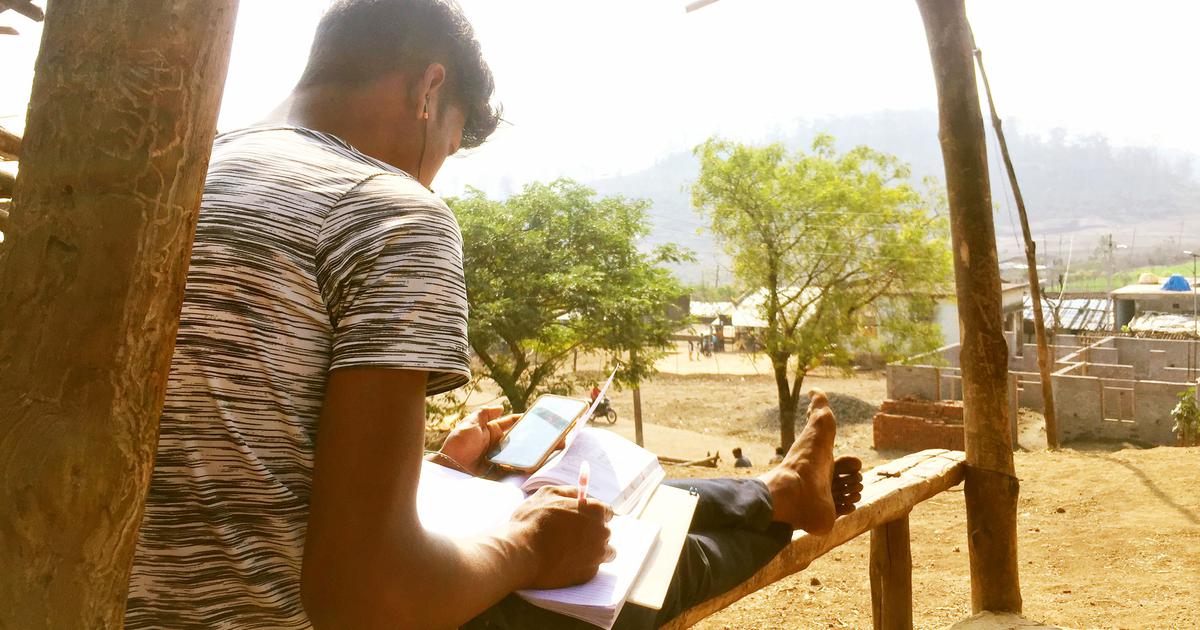
Jaylal Dhikar wakes up at 4 am. While it is still dark, the 22-year-old climbs up a stony hillock a few miles from his home. He walks from one end of the flat hillock to the other looking for a mobile network on his basic smartphone. All by himself, the second-year student of mathematics sets up his class and prays that the network stays and the phone battery lasts for the four hours he has to study before another day of back-breaking work begins.
Dhikar belongs to the Korku Adivasi community. He lives in Potilawa village of eastern Maharashtra’s thickly forested Melghat region, which made national headlines two decades ago when over 5,000 children died of malnutrition within a year. Even now the region’s Adivasi communities – Korku, Bhilala, Balai, Basor, Gond and Ozha – battle chronic poverty, hunger and isolation. Dharani block, where Potilawa is located, gets cut off during the monsoons.
Despite these challenges, a few young Adivasis like Dhikar have made it to college. But the disruptions in the wake of the Covid-19 pandemic are threatening to end their dreams. And the government is letting that happen.
A life of struggle
Dhikar lives with his father, grandmother and three brothers, two of whom are married....