


The tenacity to create something extraordinary of a mere thought has been one of the sources that helped humankind to evolve. In order to m...
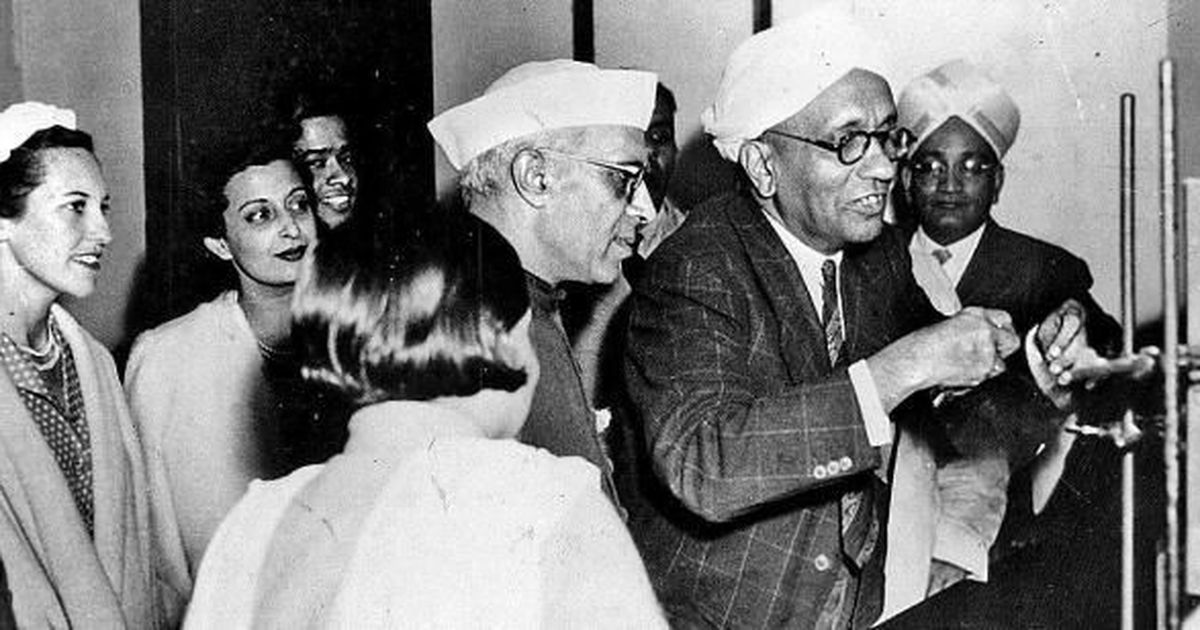
The tenacity to create something extraordinary of a mere thought has been one of the sources that helped humankind to evolve. In order to motivate and keep the spark alive in every one of us, the nation celebrates National Science Day on February 28, every year.
The day marks the discovery of the Raman effect by Indian physicist Chandrasekhara Venkata Raman, popularly known as CV Raman. He also was awarded the Nobel Prize in Physics for his work in 1930.
According to Britannica, the Raman effect is the “change in the wavelength of light that occurs when a light beam is deflected by molecules. When a beam of light traverses a dust-free, transparent sample of a chemical compound, a small fraction of the light emerges in directions other than that of the incident (incoming) beam. Most of this scattered light is of unchanged wavelength.”
About CV Raman
Dr CV Raman was born in 1888 in a village in southern India. In 1933, Raman became director and professor at the Indian Institute of Science (IIS) at Bangalore. The next year, he established the Indian Academy of Sciences. Over the following decade, he published more than 30 papers in the Proceedings of the Indian Association for the Cultivation of Science, Nature, Philosophical Magazine and Physical Review, according to...


