


In the week since India locked down to contain the spread of Covid-19, Sanjay Tadas has been unable to go to work and wears a homemade grey...
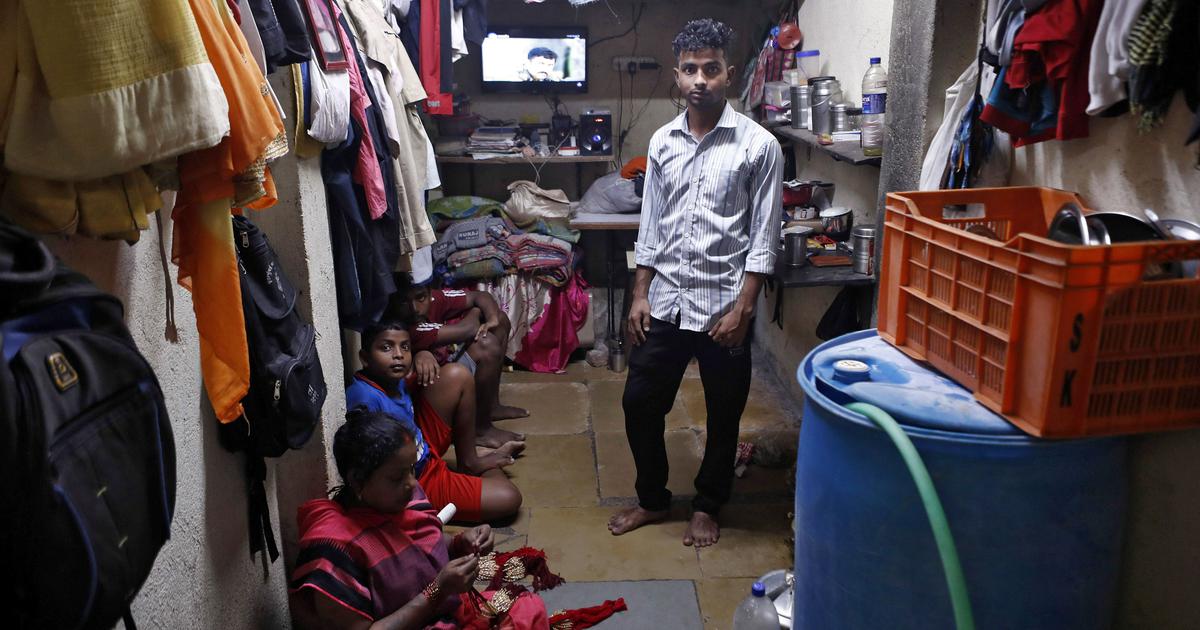
In the week since India locked down to contain the spread of Covid-19, Sanjay Tadas has been unable to go to work and wears a homemade grey mask when he steps out of his lane. Apart from that, however, little has changed in the way he and his family live life inside Shiv Nagar slum in Mumbai’s Andheri suburb.
“We are six of us living in one 100-sq-ft room, so maintaining distance from each other is impossible, of course,” said Tadas, a clerk in municipal office in Mumbai.
At night, Tadas, his wife and four children squeeze in next to each other as they always do. During the day, all the slum residents spend their time as they do on any regular weekend: sitting at their doorsteps or milling about in their narrow lane, chatting with neighbours.
A small “transit camp” for 216 families awaiting flats in a building being constructed by the city’s Slum Rehabilitation Authority, Shiv Nagar is one among lakhs of slum pockets across India’s cities where “social distancing” is an unachievable privilege. Cramped, overcrowded and often located near open drains, these bastis have little protection against the novel coronavirus that causes Covid-19.
According to a report by the ministry for urban affairs in 2019, 29.4% of...


